Conference story

Conference journey.

A record of the conferences I attend, grouped by year: the venue, the place on the map, the paper I presented, and its summary.

2026

Conference · 15-16 October 2026

2026 IEEE 12th Information Technology International Seminar (ITIS)

Denpasar, Bali, Indonesia · Truntum Kuta Hotel Bali

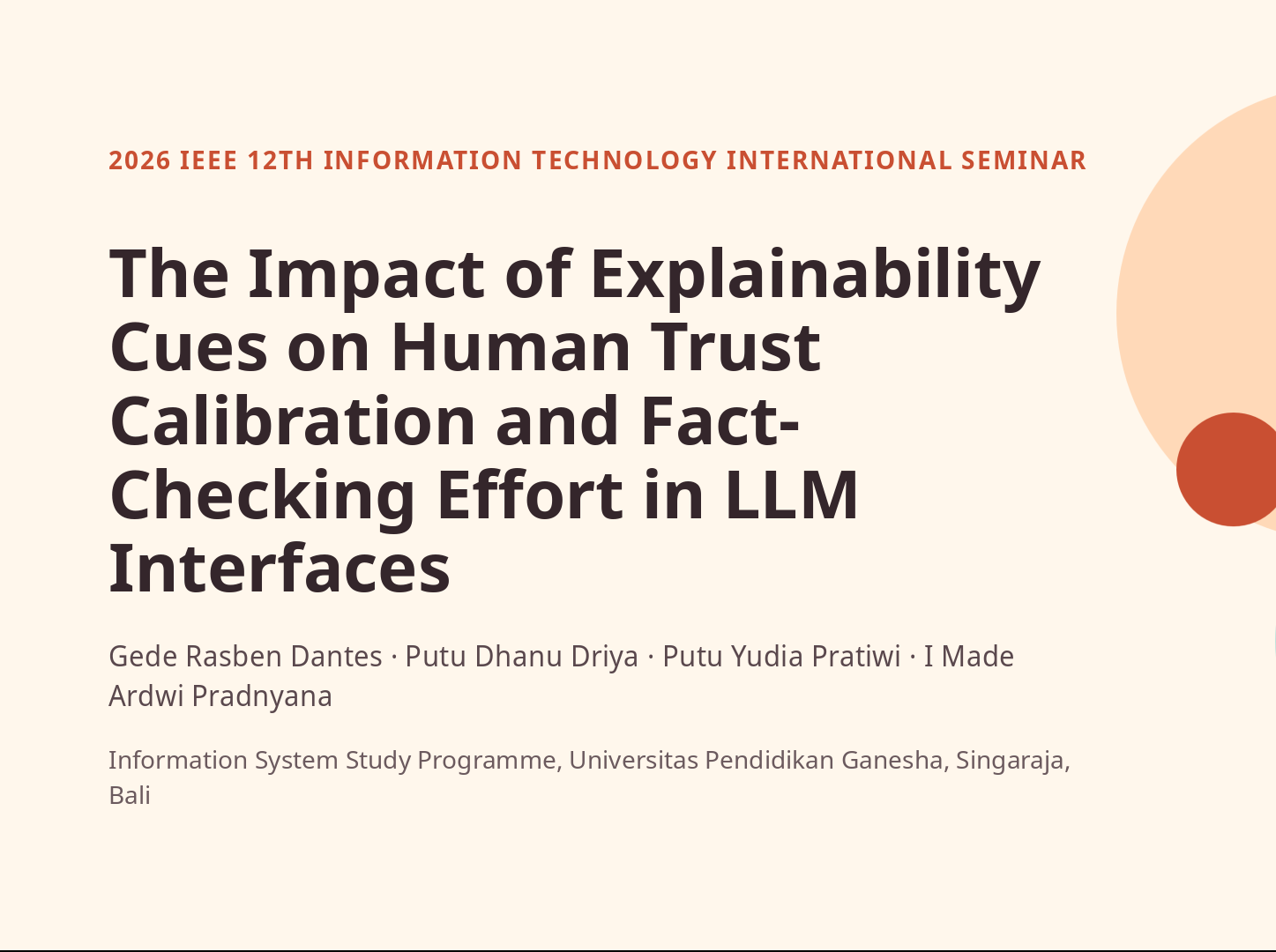
PaperThe Impact of Explainability Cues on Human Trust Calibration and Fact-Checking Effort in Large Language Model Interfaces

Presented at the 2026 IEEE 12th Information Technology International Seminar. Using multiple linear and binary logistic regression on 1,000 human-AI interaction sessions across leading LLM architectures, the study identified a “Citation Paradox”: inline citations raised subjective trust while reducing both the likelihood and duration of independent fact-checking. High AI confidence displays further deterred verification, generic disclaimers had no effect, and epistemic hedging reduced over-trust across all digital-literacy levels. The authors translate this into UI/UX guidance: dynamic epistemic hedging over static disclaimers, confidence metrics limited to deterministic queries, and progressive disclosure of citations so users actually process the source.
Open in OpenStreetMap

Conference · 14 October 2026

International Conference on Fundamental and Applied Research (I-CFAR 2026)

Bali, Indonesia · Dhyana Pura University

PaperPredicting Concrete Compressive Strength Using Random Forest and Partial Dependence Analysis

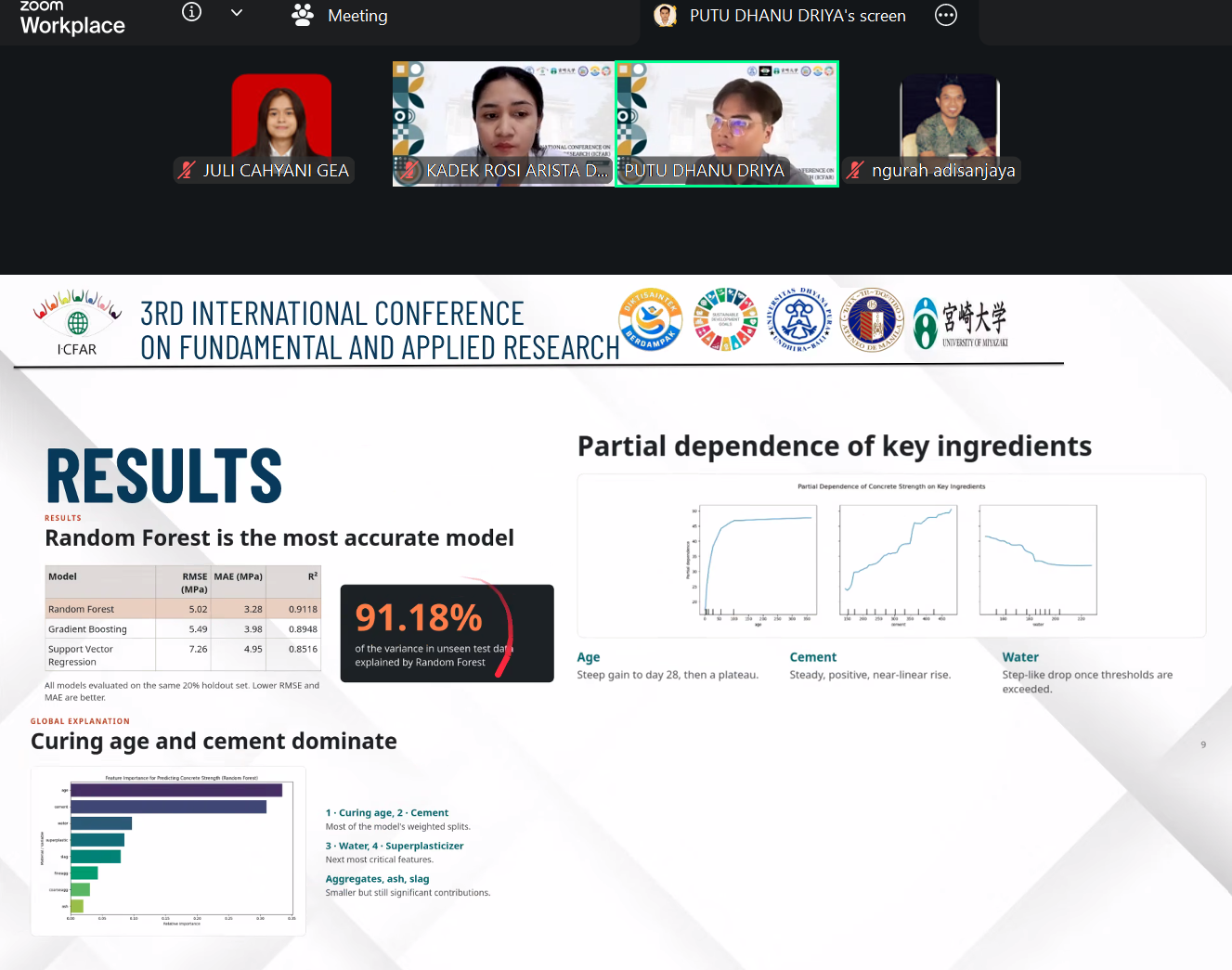
Concrete compressive strength is the primary metric for structural integrity, but mixture optimization still relies on slow, resource-intensive laboratory trials. This study developed an interpretable machine learning framework that predicts compressive strength from eight mixture variables across 1,030 samples.

A Random Forest regressor was benchmarked against Support Vector Regression and Gradient Boosting under 5-fold cross-validation. It achieved the best performance (RMSE 5.02 MPa, MAE 3.28 MPa, R² 0.9118). To make the model usable for engineers, the study applied explainable AI: global Partial Dependence Plots mapped the non-linear strength gain with curing age and the drop in strength as water content rises, a two-dimensional interaction plot showed how superplasticizers offset the water penalty, and local SHAP values explained individual batch predictions.

The work turns a black-box prediction into actionable engineering insight and points toward interactive decision-support tools for more sustainable, lower-cement concrete.

Open in OpenStreetMap

2025

Conference · 2025

Nineteenth International Conference on Design Principles & Practices

Singapore · Lasalle College of the Arts

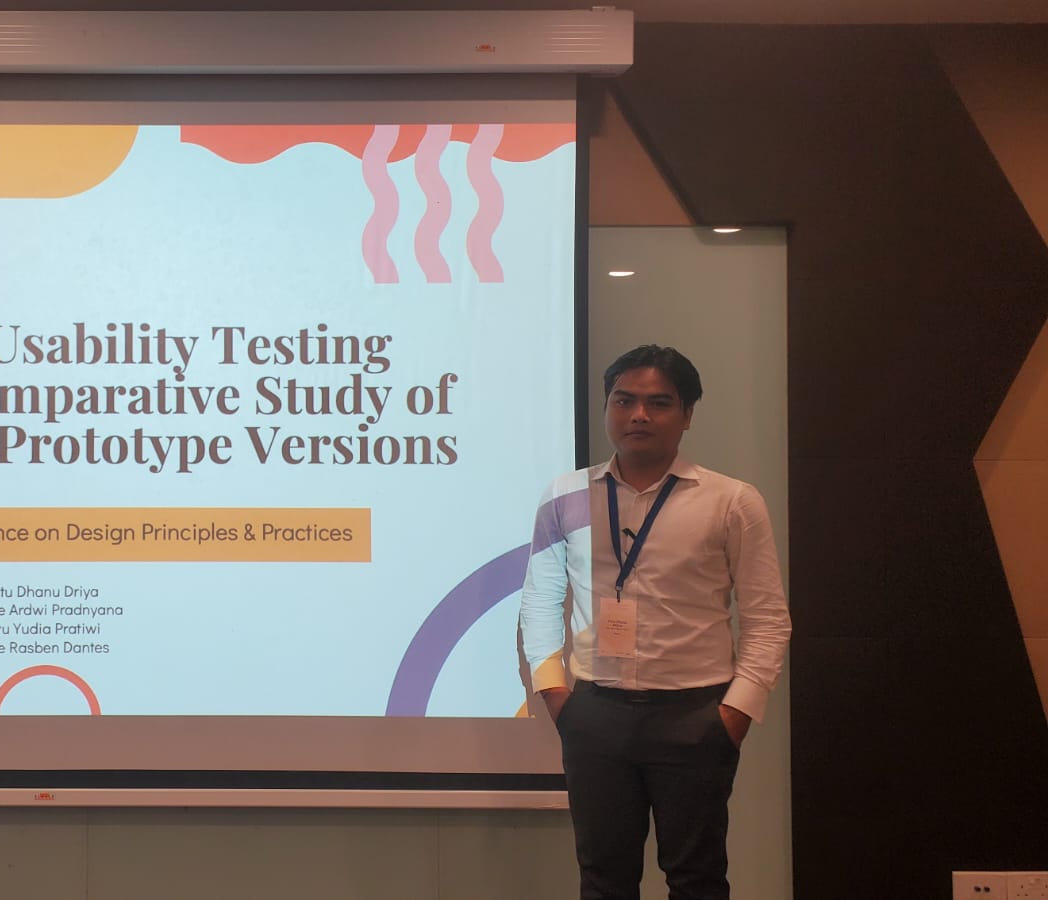
PaperClassifying Usability Testing Methods: A Comparative Study of Real Apps and Prototype Versions

The paper compares usability testing approaches across real applications and prototype versions, and organizes the methods into a classification.

This study conducted a systematic literature review and comparative analysis to evaluate various usability testing methods. The findings indicate that testing on real applications is optimal for measuring quantitative performance metrics and identifying post-launch issues, whereas prototype testing is best suited for qualitative, early-stage design refinement. To achieve the most comprehensive evaluation, the research emphasizes adopting a multi-method approach that integrates both qualitative and quantitative data. As a primary contribution, the study introduces a structured classification framework and a decision-making flowchart designed to guide practitioners in selecting the most effective testing methods based on their specific research objectives, design phases, and available resources.

Open in OpenStreetMap

2022

Conference · 2022

技術與教學國際研討會 (International Conference on Technology and Teaching)

New Taipei City, Taiwan · Department of Industrial Design, Ming Chi University of Technology

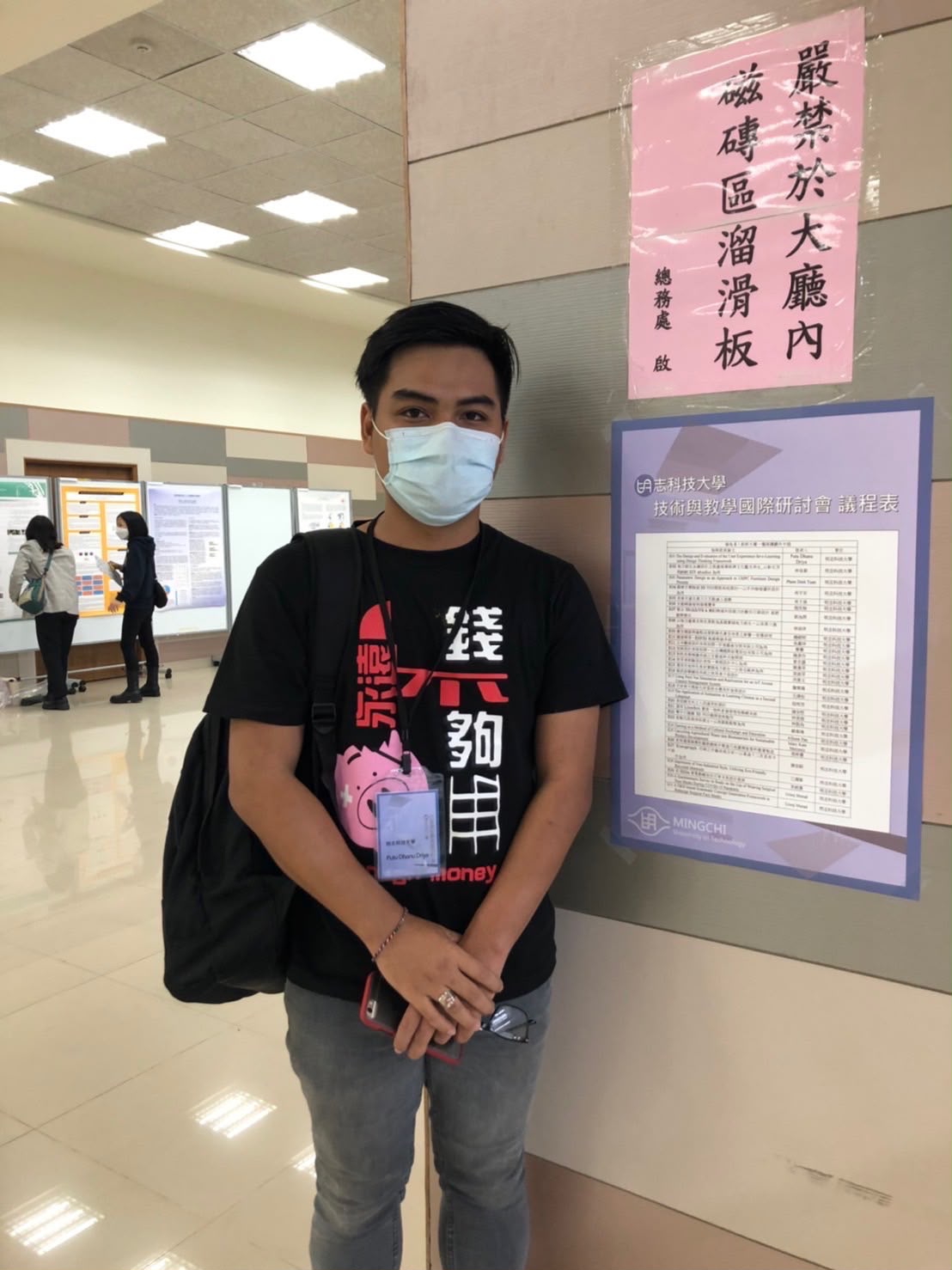
PaperThe Design and Evaluation of the User Experience for e-Learning using Design Thinking Framework

Presented by Dhanu Driya (Visual Communication Design, Ming Chi University of Technology), this study evaluated the mobile user experience of e-Learning Undiksha and designed a new mobile application using a Design Thinking process within Hevner’s Design Science Research framework. Remote usability testing with five freshmen (IT students excluded to avoid proficiency bias) found that users could complete tasks but faced high perceived complexity, cluttered layouts, and long multi-step workflows. The redesign raised the System Usability Scale from 54.5 to 80.5 and the Single Ease Question from 5.3 to 6.2.

Open in OpenStreetMap